


Stop Optimizing Holidays - The Art of Doing Nothing on Xiaoliuqiu
Where FOMO Goes to Die
The question I get most about Xiaoliuqiu is: "What is there to do here?"
My honest answer: as little as possible.
Not because there's nothing. It's a tiny island off Taiwan's southwest coast, under seven square kilometers, and you can ride a scooter around it in 20 minutes. You can freedive, scuba dive, explore caves, do small hikes and eat things you've never tried. The sea turtles are everywhere: jump in almost anywhere and there they are.
But what this island does best is nothing at all. No itinerary. No checklist. No pressure to make the most of every minute.
Xiaoliuqiu has just enough to do, and plenty of space between doing it.
When Did Holidays Become So Much Work?
Somewhere along the way, travel became something we optimize. We land with maps full of pins, saved Instagram posts, restaurant lists and things somebody online said we can't miss. Then we spend our days checking off beaches, cafés and viewpoints.
It's work in a different outfit. We chase the perfect day and come home needing a break from the break.
Xiaoliuqiu works when you resist that reflex. Don't try to see everything. Leave a few hours unscheduled. Wake up without knowing what you're doing that afternoon. Stop somewhere because it looks interesting, not because it has 4.8 stars on Google Maps.
Allow yourself to waste some time. It might not be a waste.
Two Places Nearby. Pick One.
Go to Bali or Phuket and your phone hands you a hundred recommendations for everything. Ten best cafés. Seven hidden beaches. Five sunset spots you can't miss.
Suddenly every decision feels like a test. Did we pick the right beach? Should we have gone to that other café? Even lying on the beach, the list of everything else you could be doing keeps running in the back of your head. The abundance that was supposed to make the trip better becomes one more thing to manage.
On Xiaoliuqiu, sometimes there are two places nearby. Both look good. Pick one.
There's something freeing about that. You stop hunting for the best café and just have a coffee. You stop searching for the perfect sunset spot and find somewhere facing west.
If you pick wrong, it doesn't matter. Everything here is five to ten minutes away. Different beach? Five minutes. Changed your mind about lunch? Go. Getting slightly lost here is still only getting slightly lost. When changing your mind costs nothing, no decision is a big one. And none of your holiday disappears into traffic.
Less to optimize. Less to get right. More room to notice where you are.
What Doing Nothing Looks Like Here
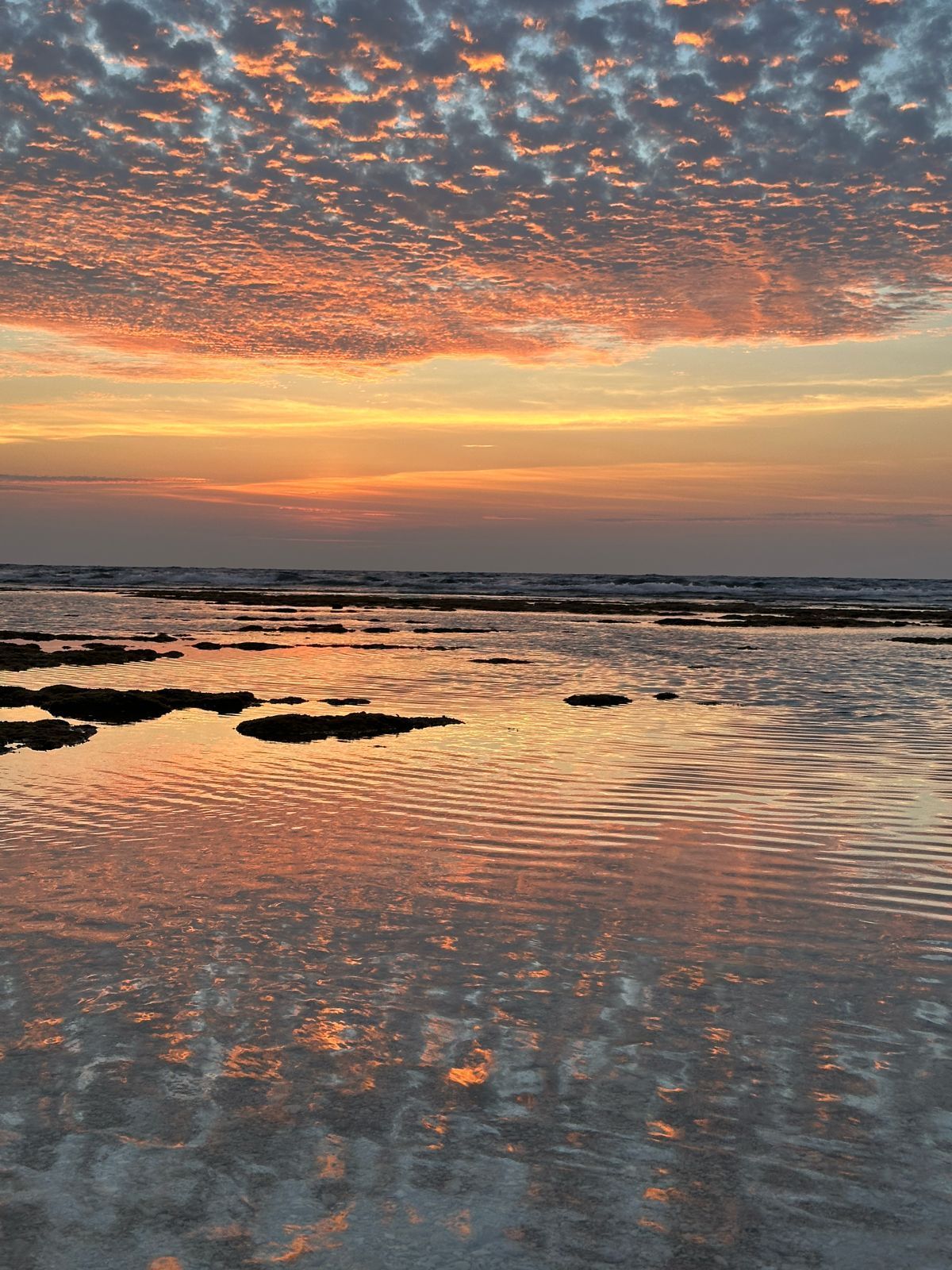
For sunset, ride over to the west side. Cruise up and down the coast and pick a spot. Any spot. It'll be a good one. Grab a tea, a coffee, a beer or a glass of wine, and watch the sun go down at May Gu Chard if you really need a recommendation. Stare at the horizon long enough and you start to forget where you end and the sea begins. Long enough to forget about your phone, and just put it away.
No research. No optimizing. That's the whole plan.
Order the 魷魚小封肉, slow-braised pork belly with squid, which you'll find at a few restaurants here. For a long time, before tourism took off about 20 years ago, this was a poor island, unless you were a fisherman who'd done well. Pork was a luxury, so cooks stretched the stew with dried squid.
It was a workaround, and it turned out to be the best part. The squid gives the whole pot a deep, savory umami that pork alone never could. Making do with less turned out to be the upgrade.
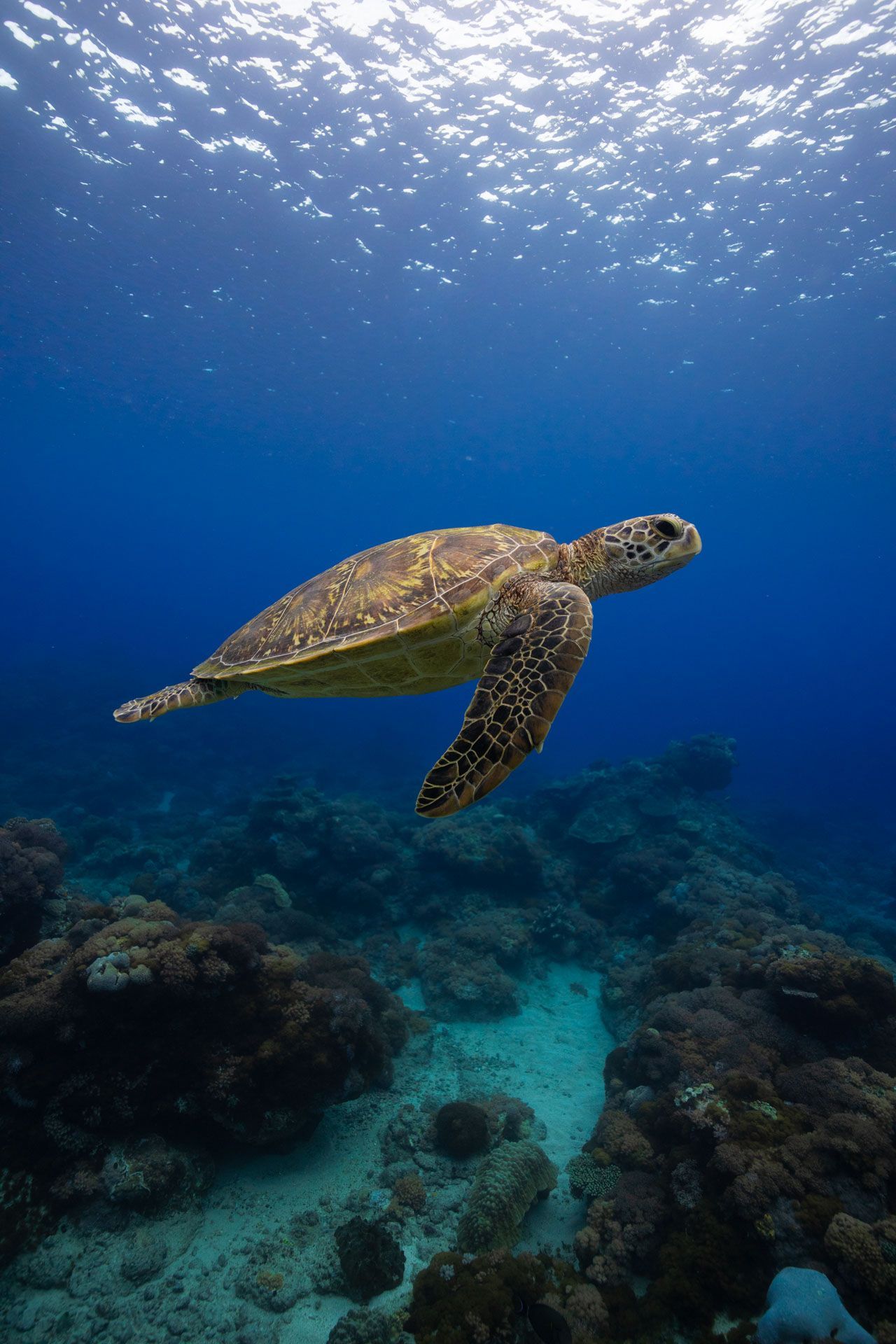
Get in the water. The turtles are probably the only must-see on this island, and you don't even have to go looking for them. Snorkel or dive in almost anywhere and they're there, rising slowly for a breath and sinking back down, completely unbothered by you. Give them space and they'll let you watch.
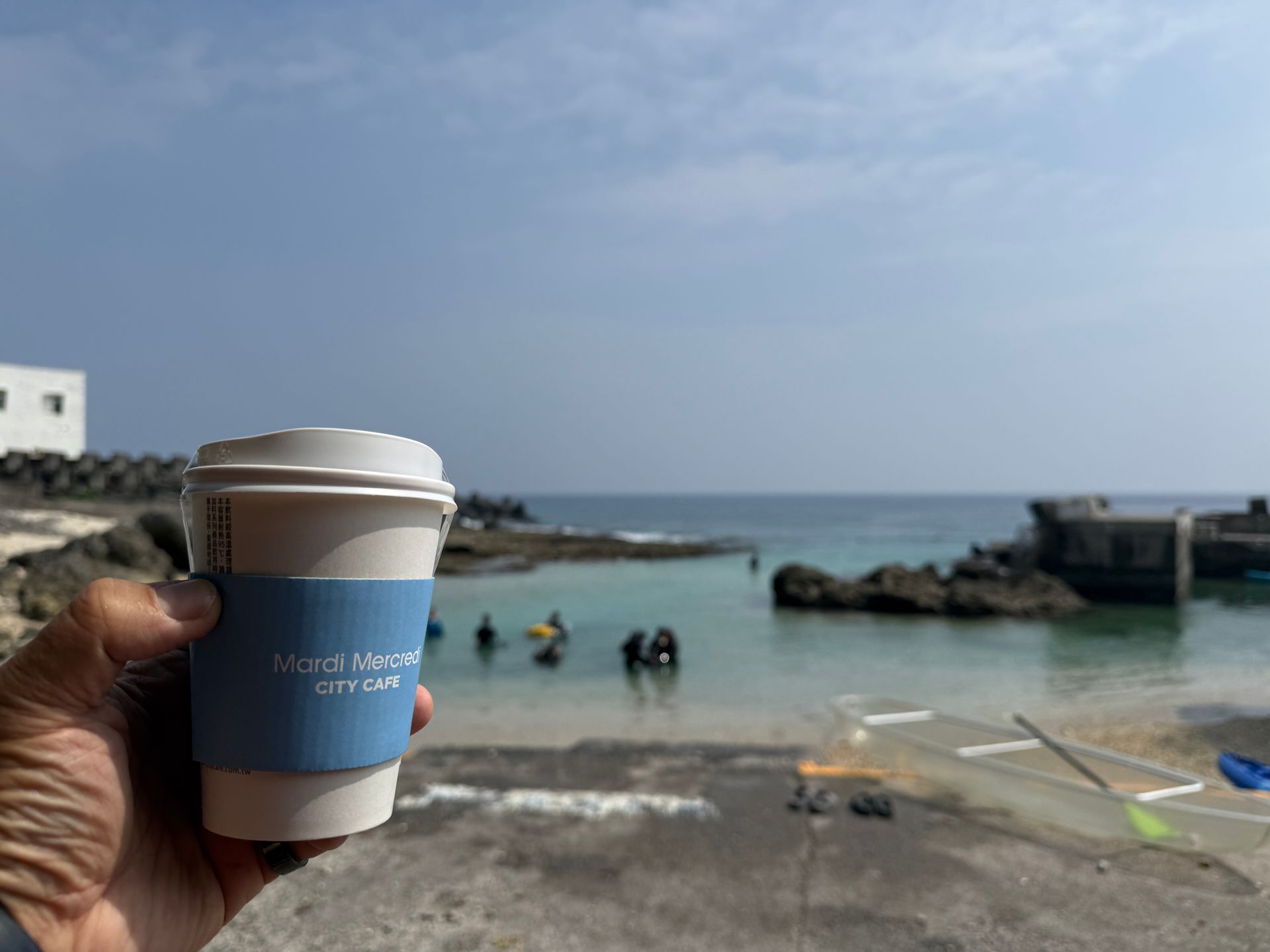
Grab a coffee from 7-Eleven or FamilyMart and sit on the sea wall. There's very good coffee on this island, but you don't have to hunt for it. The convenience store one is good enough. And with the ocean in front of you, good enough starts to feel like plenty.
Walk the coast without counting your steps. Waves, clouds, light moving on the water: none of it asks anything of you. There's enough happening to keep you present, but not so much that you have to decide, process or respond. Your mind gets to wander.
If you want an experiment, make it small. Find somewhere facing the water, put your phone away, and give yourself 20 minutes with nothing to accomplish. Then see how you feel. No meditation, breathwork or yoga necessary. I do this on a regular basis, and I love it. No technique, no practice, and I still walk away feeling great.
Space to Breathe
I spent most of my working life in Hong Kong and Taipei, surrounded by concrete.
This island is where I recovered from fibromyalgia. I can't tell you exactly how, and I won't pretend to. But I know what was different here. I was closer to nature, I wasn't living in a concrete jungle, and I finally had space to breathe.
I think that mattered more than I would have believed.
I teach breathwork for a living, and I'll tell you this: Xiaoliuqiu is a place where your breath slows down on its own. Nobody has to tell it to
Leave Space
So come and dive. Explore. Eat well. Ride around the island. Talk to somebody you wouldn't normally meet.
But leave gaps on purpose. Let the day breathe. Order something you need Google Translate to figure out, and don't photograph it first. Bring a book. Leave a few days open. Late autumn through spring is the sweet spot. Skip July, August and the long Taiwanese holidays, when the island fills up and the quiet goes with it.
Yes, I run retreats. They're great. But not everybody needs one every time. There's no program you have to follow here, no schedule telling you when to meditate or when to have your breakthrough. Come and do nothing, or come for a retreat. It's up to you.
Maybe you'll go home with photos, dive times and turtle sightings. But what lingers might be less tangible. How your shoulders dropped. How your breathing slowed. How you stopped checking the time. How a day in which you accomplished almost nothing somehow felt completely full.
That is a kind of luxury, too. Not the luxury of having more. The luxury of needing less.
And maybe the real luxury of a place like Xiaoliuqiu isn't everything you can do here.
It's everything you don't have to.


